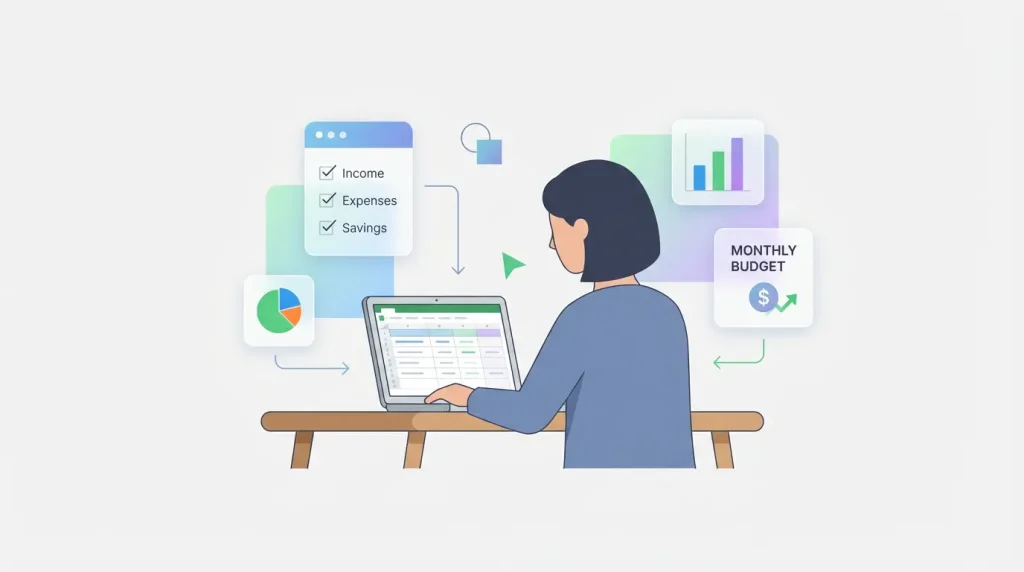
Have you tried every budgeting method out there, only to end up feeling more stressed, restricted, and guilty than when you started? You’re not alone. The problem isn’t your willpower—it’s the rigid, outdated system. This guide throws out the old rulebook. We’ll introduce the ‘Anti-Budget,’ a flexible, automated financial system designed to align with your psychology, crush financial anxiety, and give you back control—guilt-free. If you’re looking for how to budget without feeling restricted, this is your blueprint for lasting financial peace.
Table of Contents
- Budgeting for Freedom, Not Restriction: The Anti-Budget Mindset Shift
- Finding Your Perfect System: A Practical Guide to Flexible Budgeting
- Crush Financial Anxiety with Technology: Your Guide to Automation
- Making It Stick: Overcoming the Most Common Budgeting Challenges
- Conclusion
Budgeting for Freedom, Not Restriction: The Anti-Budget Mindset Shift
The first step to building a budget you can actually stick to is changing how you think about it. For decades, budgeting has been framed as a restrictive cage, a list of things you can’t have. The Anti-Budget reframes it as a tool for empowerment—a strategic plan that directs your money toward the things you value most, whether that’s a dream vacation, a debt-free life, or simply the ability to order takeout without a pang of guilt. It’s about designing a system that serves your goals, not one that punishes your spending.
The Psychology of Sticking to a Budget
Traditional budgets often fail because they go against human nature. When you create a list of strict, unforgiving rules, you trigger a psychological response known as reactance—a natural urge to resist and rebel against the perceived loss of freedom. This is why crash diets often lead to binge eating, and it’s why penny-pinching budgets lead to impulse splurges. The constant tracking and categorizing creates decision fatigue, and any small deviation can trigger feelings of failure, leading you to abandon the system altogether. This cycle is a major source of financial anxiety.
The key to success lies in behavioral principles that make habits stick. Instead of focusing on deprivation, we should focus on positive reinforcement and clear goals. As highlighted in guidelines for successful budgeting and financial planning by the California Department of Financial Protection and Innovation, a successful plan is one that is tailored to your individual goals and personality. The psychology of sticking to a budget is about creating a system that feels empowering and aligns with your values, making it a natural part of your life rather than a constant battle.
What is the ‘Anti-Budget’? A System for People Who Hate Budgeting
The anti-budget is less a set of rules and more a philosophy built on three core pillars:
- Automation: Your essential bills and savings goals are paid automatically, without you lifting a finger. This removes the willpower from the equation.
- Conscious Spending: You intentionally cut costs on things you don’t care about to free up money for the things you genuinely love.
- Goal Clarity: You budget with a clear purpose in mind, turning your financial plan into a roadmap for achieving your life goals.
Unlike traditional methods that demand you track every single coffee and sandwich, the Anti-Budget focuses on the big picture. It answers the question of how to budget without feeling restricted by automating your responsibilities (needs and savings) first. Whatever is left in your primary checking account is your “guilt-free spending money.” You don’t need to track it, categorize it, or feel bad about it. This approach eliminates the mental friction and guilt associated with traditional budgeting, making it a sustainable system for people who have always hated the B-word.
Finding Your Perfect System: A Practical Guide to Flexible Budgeting
The beauty of the Anti-Budget philosophy is its flexibility. It’s not a one-size-fits-all method but a framework you can apply to various budgeting systems. The goal is to find a structure that aligns with your personality and financial situation. Here’s a look at three popular methods that work exceptionally well within an automated, anti-restriction framework.
For the Controller: Zero-Based Budgeting for Beginners
For those who crave clarity and control, zero-based budgeting for beginners offers a powerful solution. The concept is simple: income minus expenses equals zero. You “give every dollar a job,” allocating your entire monthly income to specific categories like bills, savings, debt repayment, and spending. This might sound restrictive, but when used in an Anti-Budget system, it’s about control, not confinement. You decide what’s important, and your budget reflects those priorities.
Here’s how to create a budget for the first time using this method:
- List Your Income: Calculate your total monthly take-home pay.
- List Your Fixed Expenses: Itemize all your recurring bills with set amounts (rent/mortgage, insurance, car payments).
- List Your Variable Expenses: Estimate your spending on categories that fluctuate (groceries, gas, utilities).
- Allocate to Goals: Designate funds for your savings and debt repayment goals.
- Create a “Guilt-Free Spending” Fund: Whatever is left over becomes your discretionary spending money. You have full permission to spend this however you like.
The goal isn’t to spend zero; it’s to leave zero dollars unassigned.
For the Balancer: The 50/30/20 Rule for Simple Financial Planning
If detailed tracking feels overwhelming, the 50/30/20 rule is a beautifully simple alternative. This method provides a clear, balanced structure without micromanagement, making it an excellent living paycheck to paycheck budget plan to break the cycle. The University of Pennsylvania highlights it as one of the most popular budgeting strategies due to its simplicity.
Here’s the breakdown:
- 50% for Needs: This portion of your after-tax income covers essential living expenses: housing, utilities, transportation, groceries, and insurance.
- 30% for Wants: This is your guilt-free spending money for dining out, hobbies, shopping, and entertainment. This flexibility prevents the feeling of restriction.
- 20% for Savings & Debt: This slice goes directly toward your financial goals, such as building an emergency fund, saving for retirement, or aggressively paying down debt.
You can use a 50/30/20 budget rule calculator online to quickly see how your income divides. The power of this method lies in its focus on percentages rather than exact dollar amounts, making it easily adaptable to your life.
For the Tactile Saver: A Modern Twist on the Envelope System
The envelope system for cash stuffing is a time-tested method for controlling overspending, especially for those who struggle with impulse buys. The traditional approach involves withdrawing cash and physically dividing it into labeled envelopes for different spending categories (e.g., “Groceries,” “Gas,” “Fun Money”). When an envelope is empty, you stop spending in that category until the next payday.
In our digital world, this system gets a modern upgrade:
- Digital Envelopes: Many of the best budgeting apps for impulse spending offer “digital envelope” features. You can create virtual pots of money within your account, tracking your spending against them without ever touching cash.
- Dedicated Bank Accounts: Open multiple free savings accounts and name them after your goals (“Vacation Fund,” “New Car,” “Emergency Fund”). Automate transfers from your main checking account into these “envelopes” on payday. This keeps your goal-oriented money separate and safe from accidental spending.
This modern approach gives you the same psychological separation and control as the cash method but with the convenience and security of digital banking.
Crush Financial Anxiety with Technology: Your Guide to Automation
Automation is the engine of the Anti-Budget. It’s what transforms your financial plan from a stressful, manual chore into a seamless background process. By setting up your system to run on autopilot, you remove the daily temptations and decisions that lead to budget fatigue. You pay your bills on time, consistently hit your savings goals, and eliminate the need for heroic levels of willpower.
How to Build Your Automated Budget Tracker
Building an automated budget tracker system is surprisingly straightforward. It involves strategically setting up accounts and transfers to direct your money where it needs to go before you even have a chance to spend it. This is how to budget without feeling restricted: you build a structure that makes responsible choices for you.
Here’s a step-by-step guide:
- Set Up a “Bill” Account: Open a separate, dedicated checking account purely for your fixed bills. Calculate the total monthly cost of your rent/mortgage, utilities, insurance, and other recurring subscriptions.
- Automate Your Paycheck Split: Configure your direct deposit (or set up an automatic transfer) to send the exact amount needed to cover your bills from each paycheck into your “Bill” account.
- Automate Your Savings: Set up another automatic transfer from your main account to your high-yield savings account(s) for your long-term goals (emergency fund, retirement, down payment). This is the “pay yourself first” principle in action.
- Live Off the Rest: The money remaining in your primary checking account is now your true “guilt-free spending money.” You can spend it on wants, knowing with 100% certainty that your bills are covered and your savings goals are being met.
The Best Budgeting Apps for Impulse Spending and Automation
The right technology can supercharge your Anti-Budget. The best budgeting apps for impulse spending not only track your cash flow but also provide features that actively help you build better habits. When choosing an app, look for one that functions as an automated budget tracker and provides clear visibility into your spending without overwhelming you.
Here are a couple of top contenders:
- YNAB (You Need A Budget): This app is the digital equivalent of zero-based budgeting. It forces you to “give every dollar a job,” which is incredibly effective for gaining control over your finances. Its strength lies in promoting intentionality. By assigning funds before you spend, it helps you see the direct trade-offs of your purchases, curbing impulse buys.
- Qapital: Built around goal-setting and automation, Qapital is perfect for the Anti-Budget mindset. You can set up “Rules” to save money automatically—for example, rounding up your purchases to the nearest dollar and saving the change, or saving a set amount every time you get paid. It makes saving effortless and even fun.
- Rocket Money (formerly Truebill): This app excels at automation and visibility. It automatically identifies and categorizes your spending, tracks your bills, and even helps you cancel unwanted subscriptions with a single click. Its dashboard gives you a clear, at-a-glance view of your cash flow, helping you spot where your money is going without manual tracking.
Making It Stick: Overcoming the Most Common Budgeting Challenges
Even the most flexible system will face challenges. Life is unpredictable, incomes fluctuate, and debt can feel overwhelming. The strength of the Anti-Budget is its resilience. Here’s how to adapt your system to overcome two of the biggest financial hurdles.
The Freelancer’s Plan: Budgeting with an Irregular Income
For freelancers, gig workers, and commission-based employees, a fluctuating income can make traditional budgeting feel impossible. The key is to create a buffer and budget based on a consistent, predictable amount. This is a critical strategy for anyone creating a living paycheck to paycheck budget plan when their “paycheck” changes month to month.
Here’s a proven method for those asking how to budget without feeling restricted on a variable income:
- Calculate Your Baseline: Look at your income over the last 6-12 months and find your lowest earning month. This becomes your baseline “salary.”
- Open Separate Accounts: Set up three key accounts: a “Deposit” account where all client payments land, a “Salary” account from which you pay yourself, and a “Tax” account.
- Pay Yourself a “Paycheck”: On a set schedule (e.g., the 1st and 15th), transfer your baseline salary amount from the Deposit account to your Salary account. You will live and budget off this consistent figure.
- Set Aside for Taxes: Each time you receive a payment in your Deposit account, immediately transfer 25-30% into your Tax account. Do not touch this money.
- Build Your Buffer: Any money left in the Deposit account after paying yourself and setting aside for taxes is your surplus. Let it build up. In months where your income is below your baseline, you’ll draw from this buffer to pay your “salary.”
As advised by Austin Community College, one of the essential steps to start budgeting is adjusting for these realities. This method smooths out the financial peaks and valleys, reducing stress and allowing you to follow a consistent plan.
The Debt Freedom Plan: Budgeting Tips for Overcoming Debt Without the Guilt
Crushing debt is a top priority for many, but a scorched-earth approach that cuts out all “fun” is a recipe for burnout and failure. Integrating budgeting tips for overcoming debt into a flexible Anti-Budget system is the key to staying motivated for the long haul.
It’s possible to attack debt aggressively without increasing your financial anxiety. Here’s how:
- Automate Your Minimums: First, ensure the minimum payments for all your debts are automated from your “Bill” account. This prevents late fees and protects your credit score.
- Choose Your Strategy (Snowball vs. Avalanche):
- Snowball: Focus all extra payments on your smallest debt first, regardless of interest rate. The quick wins provide powerful psychological motivation.
- Avalanche: Focus all extra payments on your highest-interest debt first. This method saves you the most money over time.
- Create a “Debt Snowball” Fund: Treat your extra debt payment as a non-negotiable “bill.” Automate a transfer for this amount into a separate account on payday. Then, make one large extra payment to your target debt from that account.
- Protect Your “Wants”: Crucially, continue to allocate a reasonable amount to your guilt-free spending category (the “30%” in a 50/30/20 plan, for example). This ensures you don’t feel completely deprived, which is essential for long-term consistency.
Conclusion
Financial control and freedom don’t come from rigid restriction. They come from building a smart, flexible, and automated system that understands your psychology and aligns with your life. The Anti-Budget isn’t about saying “no” to everything; it’s about creating a system that automatically says “yes” to your most important goals—paying your bills, building your savings, and crushing your debt—while giving you the freedom to spend the rest guilt-free. This is the path to ending financial anxiety and finally achieving peace of mind with your money.
Ready to finally build a budget you can actually stick to? Download our free Irregular Income Budgeting Template to get started today.